Stump Grinding vs. Stump Removal: Which Is Better for Your El Monte Property?
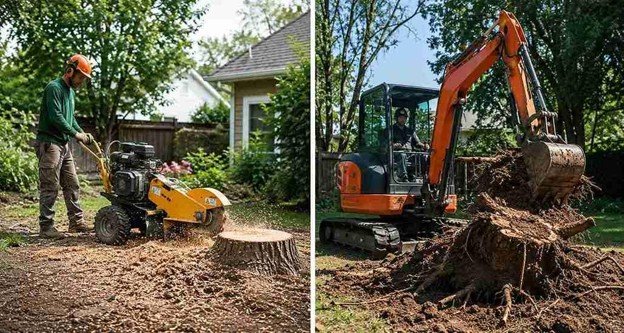
Removing a tree is often only the first step in restoring your landscape. Once the trunk has been cut down, homeowners are left with another important decision: Should you grind the stump or remove it completely?
Although both options eliminate the visible stump, they involve very different processes and are designed for different situations. Understanding the advantages and limitations of each method can help homeowners make the best decision based on their property’s landscaping goals, future construction plans, and long-term maintenance needs.
Throughout El Monte, many homeowners choose stump grinding because it is less disruptive to surrounding landscaping, while others prefer complete stump removal when preparing for major renovations or replanting. The right solution depends on factors such as the size of the tree, the location of the stump, nearby utilities, and your plans for the property.
If you’ve recently had a tree removed, our professional stump grinding and removal services in El Monte can help determine the most effective solution for your landscape.
If you’re still deciding whether the tree should be removed at all, our professional tree removal services in El Monte explain the complete removal process and what homeowners can expect before work begins.
Why Removing the Tree Isn’t Always the Final Step
Many homeowners assume that once a tree has been cut down, the project is finished.
In reality, leaving a stump behind can create several practical and aesthetic concerns that continue long after the tree itself has been removed.
A remaining stump may:
- Reduce usable yard space
- Make lawn maintenance more difficult
- Create a tripping hazard
- Attract insects over time
- Interfere with future landscaping projects
- Affect the overall appearance of the property
Whether you choose stump grinding or complete removal depends largely on your long-term plans for the area.
Why Some Homeowners Leave the Stump
Not every property owner chooses immediate stump removal.
Some homeowners delay the process because they plan to redesign their landscape later or simply want to spread project costs over time.
Others may temporarily leave the stump if:
- The area is rarely used.
- Landscaping changes are planned.
- The stump does not interfere with mowing.
- Future construction has not yet been scheduled.
While this approach may work in some situations, it’s still important to monitor the stump for signs of decay, insect activity, or new sprout growth.
Benefits of Removing the Stump
Removing or grinding the stump offers several long-term advantages.
Many homeowners choose stump removal to:
- Improve curb appeal.
- Create a smoother lawn.
- Eliminate tripping hazards.
- Prevent unwanted tree sprouts.
- Prepare for new landscaping.
- Increase usable outdoor space.
Completing the project also allows the landscape to recover more quickly after tree removal.
What Is Stump Grinding?
Stump grinding is the most common method used after tree removal.
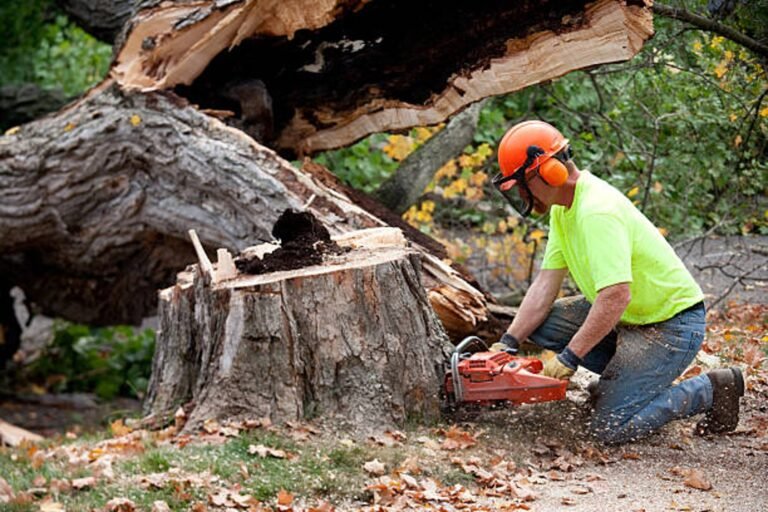
Rather than excavating the entire stump and root system, a specialized machine called a stump grinder gradually grinds the remaining wood into small wood chips below ground level.
Once the stump has been ground down, the area can often be covered with soil and prepared for grass, mulch, or other landscaping improvements.
Because grinding causes less disturbance to the surrounding yard, it is frequently recommended for residential properties where preserving existing landscaping is important.
How Stump Grinding Works
Professional stump grinders use a rotating cutting wheel equipped with hardened teeth that gradually reduce the stump into wood chips.
The process typically involves:
- Inspecting the stump.
- Identifying underground utilities when necessary.
- Positioning the grinding equipment.
- Grinding the stump below the soil surface.
- Cleaning the work area.
- Backfilling the hole if requested.
The remaining wood chips are often reused as mulch or removed depending on the homeowner’s preference.
Advantages of Stump Grinding
Stump grinding offers several practical benefits.
Homeowners often choose this method because it:
- Requires less excavation.
- Causes minimal disruption to surrounding landscaping.
- Is generally completed more quickly.
- Preserves nearby sidewalks, patios, and driveways.
- Reduces cleanup compared to full stump removal.
- Allows the area to be restored more easily.
For many residential landscapes throughout El Monte, stump grinding provides an excellent balance between efficiency and property preservation.
What Is Complete Stump Removal?
Unlike stump grinding, complete stump removal involves extracting both the stump and a significant portion of the root system from the ground.
This process typically requires excavation equipment capable of removing the entire root flare along with surrounding soil.
Because the procedure is more extensive, complete stump removal is generally recommended only when specific site conditions make it necessary.
Examples include:
- Preparing for new construction.
- Installing a swimming pool.
- Building an addition.
- Replacing underground utilities.
- Planting a new tree in the exact same location.
How Complete Stump Removal Differs
While stump grinding focuses on reducing the visible stump, complete removal physically extracts much of the remaining root system.
This usually involves:
- Excavation around the stump.
- Cutting major roots.
- Removing the stump from the ground.
- Filling and compacting the remaining hole.
- Restoring the surrounding landscape.
Because excavation is involved, the surrounding yard typically requires more restoration afterward.
Benefits of Complete Stump Removal
Although more involved, complete removal offers several advantages in certain situations.
Benefits may include:
- Eliminating major roots.
- Preparing the site for construction.
- Allowing new tree planting in the same location.
- Removing underground obstacles.
- Providing a completely clear building area.
For projects involving foundations, patios, utility work, or significant landscaping renovations, complete removal may be the better long-term investment.
Stump Grinding vs. Stump Removal: What’s the Difference?
Both methods eliminate the visible stump, but they achieve that goal in different ways.
Stump grinding focuses on reducing the stump below ground level while leaving much of the root system to naturally decompose over time.
Complete stump removal physically extracts the stump and many of the major roots, creating a clean site for future construction or landscaping.
The right choice depends on your property’s goals rather than assuming one method is always better than the other.
If you’re unsure which option is right for your property, our professional stump grinding and removal specialists in El Monte can evaluate your landscape and recommend the most appropriate solution based on your long-term plans.
Which Option Is Better for Your Property?
The best choice depends on what you plan to do with your property after the tree has been removed.
For many homeowners in El Monte, stump grinding provides an efficient solution that restores the appearance of the yard while minimizing disruption to the surrounding landscape. However, complete stump removal may be the better option when construction, major landscaping, or utility work is planned.
Rather than asking which method is universally better, it’s more helpful to ask which one best fits your property’s future needs.
When Stump Grinding Is Usually the Better Choice
Stump grinding is often recommended when homeowners want to improve the appearance of their yard without disturbing nearby landscaping.
It may be the preferred option if you plan to:
- Restore your lawn
- Install new sod
- Add mulch or decorative rock
- Improve curb appeal
- Continue using the existing landscape design
- Avoid major excavation
Because the surrounding soil remains largely undisturbed, recovery is often quicker than complete stump removal.
Many residential properties throughout El Monte benefit from this less invasive approach.
When Complete Stump Removal May Be the Better Option
Complete stump removal is often recommended when the remaining root system could interfere with future projects.
Examples include:
- Building a patio
- Installing a driveway
- Constructing an addition
- Pouring concrete
- Installing underground utilities
- Planting a replacement tree in the exact same location
Although this process requires more excavation, it creates a completely clear area for future development.
A professional inspection helps determine whether the additional work is necessary based on your property’s plans.
What Happens to Tree Roots After Stump Grinding?
One of the most common questions homeowners ask is whether the tree’s roots continue growing after the stump has been ground.
In most cases, the remaining roots gradually break down naturally over time once they are no longer supported by the living tree.
The exact process depends on several factors, including:
- Tree species
- Root size
- Soil conditions
- Moisture levels
- Climate
- Microbial activity
While some larger roots may remain underground for years, they generally lose their ability to support new growth once the stump has been properly ground.
Will the Roots Damage My Property?
Many homeowners worry that remaining roots will continue damaging sidewalks, driveways, or foundations.
After a tree has been removed, existing roots typically begin decomposing rather than expanding.
However, every property is different.
If roots are already affecting nearby structures, a professional evaluation can determine whether additional root removal or excavation may be appropriate.
Can New Shoots Grow After Stump Grinding?
Some tree species naturally produce new sprouts from the remaining root system.
Whether this occurs depends largely on the species and the condition of the tree before removal.
If new growth appears, it can often be managed through routine maintenance or additional treatment when appropriate.
Can You Plant a New Tree After Stump Grinding?
Many homeowners hope to replace a removed tree with a new one.
In many situations, this is possible, although the best planting location depends on the size of the previous tree, remaining roots, and available space.
Rather than planting directly into the old stump location, professionals often recommend selecting a nearby location that provides healthy soil and sufficient room for future root development.
Proper planning gives the new tree the best opportunity to establish a strong, healthy root system.
Landscaping After Stump Grinding
Once the grinding process has been completed, homeowners frequently choose to improve the area by installing:
- New grass
- Decorative mulch
- Flower beds
- Shrubs
- Ground cover
- Landscape borders
Because stump grinding leaves much of the surrounding soil intact, these improvements can often begin soon after cleanup has been completed.
How Long Does Stump Grinding or Stump Removal Take?
The amount of time required depends on several factors, including the size of the stump, tree species, accessibility, and surrounding site conditions.
Smaller residential stumps may be completed relatively quickly, while large mature trees with extensive root systems naturally require more time.
Every project is unique, which is why professional inspections remain the most accurate way to estimate project duration.
Factors That Influence Project Time
Several conditions may affect how long the work takes.
These include:
- Stump diameter
- Root flare size
- Tree species
- Equipment access
- Soil conditions
- Nearby utilities
- Number of stumps
- Cleanup requirements
Understanding these variables helps homeowners better prepare for the project.
Equipment Used for Professional Stump Removal
Professional tree companies use specialized equipment designed to safely remove stumps while minimizing unnecessary disturbance to the surrounding landscape.
Common equipment may include:
- Stump grinders
- Mini skid steers
- Excavators
- Chainsaws
- Root cutting equipment
- Wood chippers
- Utility locating tools
Using professional equipment allows crews to complete the work more efficiently while protecting nearby structures, sidewalks, irrigation systems, and landscaping.
Why Professional Equipment Matters
Attempting to remove a stump using rented equipment may seem appealing, but stump removal often involves underground roots, buried obstacles, and heavy machinery that require experience to operate safely.
Professional crews understand how to:
- Protect underground utilities
- Avoid unnecessary property damage
- Restore the work area
- Manage debris
- Complete the project efficiently
Hiring experienced professionals often reduces the risk of costly repairs caused by accidental excavation damage.
How Professionals Calculate Stump Grinding Costs
One of the most common homeowner questions is how stump grinding estimates are determined.
Rather than using one fixed price, professionals evaluate several factors before preparing an estimate.
Common considerations include:
- Stump diameter
- Tree species
- Accessibility
- Number of stumps
- Equipment requirements
- Root complexity
- Cleanup requested
- Site conditions
Because every property is different, an on-site inspection provides the most accurate assessment.
If you’re also comparing complete tree removal costs, our Tree Removal Cost Guide for El Monte homeowners explains the many factors that influence overall tree service pricing.
Choosing the Right Stump Grinding or Stump Removal Service
Whether you’ve recently removed a hazardous tree or are simply improving your landscape, choosing the right tree care company can make the project safer, more efficient, and less disruptive to your property.
An experienced tree service will evaluate the stump, explain the available options, and recommend the most appropriate solution based on your future landscaping plans rather than suggesting the same service for every property.
If you’ve recently completed a tree removal, our professional stump grinding and removal services in El Monte provide customized recommendations based on your property’s layout and long-term goals.
Questions to Ask Before Scheduling Stump Removal
Before hiring a contractor, consider asking:
- Is stump grinding or complete removal better for my property?
- How deep will the stump be removed?
- Will the roots remain underground?
- Is cleanup included?
- Can the area be replanted afterward?
- Will nearby landscaping be protected?
- How long will the project take?
- Are underground utilities a concern?
These questions help homeowners better understand the process while ensuring the recommended solution aligns with future landscaping plans.
Common Mistakes Homeowners Make After Tree Removal
Many homeowners focus on removing the tree but overlook the remaining stump until it becomes an inconvenience.
Some of the most common mistakes include:
- Leaving a stump that creates a mowing obstacle.
- Waiting until insects or decay become a problem.
- Attempting DIY stump removal using rented equipment.
- Planting directly into the old stump location.
- Assuming every stump must be completely excavated.
- Forgetting to plan for future landscaping projects.
Addressing the stump shortly after tree removal often results in a cleaner, safer, and more attractive landscape.
Why DIY Stump Removal Can Be More Difficult Than Expected
Removing a stump involves much more than cutting visible wood.
Large root systems, underground obstacles, compacted soil, and limited equipment access can make the project far more challenging than many homeowners expect.
Professional crews use specialized stump grinders and excavation equipment designed to safely remove stumps while minimizing damage to nearby sidewalks, irrigation systems, fences, and existing landscaping.
For most residential properties, hiring experienced professionals is often the safest and most efficient option.
Which Option Is Right for Your El Monte Property?
Both stump grinding and complete stump removal are effective solutions, but each serves a different purpose.
Stump grinding is generally the preferred choice for homeowners who want to improve their landscape while minimizing disruption to surrounding soil and existing landscaping.
Complete stump removal may be the better option when preparing for construction, installing new utilities, or planting a replacement tree in the exact same location.
A professional evaluation helps determine which solution best fits your property’s current condition and long-term plans.
Final Thoughts
Although tree removal often receives the most attention, removing the remaining stump is an equally important step in restoring your property’s appearance, safety, and functionality.
For many homeowners throughout El Monte, stump grinding provides an efficient, cost-effective solution that improves curb appeal while preserving existing landscaping. In other situations, complete stump removal offers the best long-term option for future construction or major landscape renovations.
Understanding the differences between these two services allows homeowners to make informed decisions based on their property’s unique needs rather than choosing a one-size-fits-all approach.
If you’ve recently removed a tree or are planning a landscaping project, CanopyQuest Tree Care provides professional stump grinding, stump removal, tree removal, and complete tree care services throughout El Monte and the surrounding communities.
To learn more about our services and additional homeowner resources, visit our El Monte Tree Service Resource Center or explore our complete tree service solutions for residential and commercial properties.