What to Do After a Storm Damages a Tree in El Monte, CA
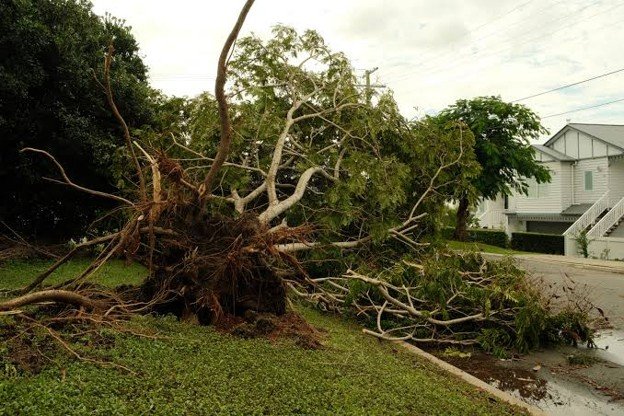
Storms can cause significant damage to trees, even when the weather doesn’t seem particularly severe. Strong winds, heavy rain, saturated soil, and falling branches can weaken healthy trees, create dangerous hazards, and leave homeowners wondering what to do next.
In El Monte, seasonal winter storms, occasional thunderstorms, and powerful Santa Ana wind events can all contribute to tree failures. While some storm damage is immediately visible, other structural problems may not become apparent until weeks or even months later.
Knowing how to respond after a storm can help protect your family, prevent additional property damage, and reduce the likelihood of costly repairs. Acting quickly, but safely, is the key to minimizing risks while allowing professionals to properly assess the tree’s condition.
If your property has experienced storm damage, our 24-hour emergency tree service in El Monte, CA provides rapid response for hazardous trees, broken limbs, and emergency removals.
If a tree cannot be safely preserved, our professional tree removal services in El Monte can evaluate the damage and recommend the safest solution for your property.
Why Storm-Damaged Trees Can Be More Dangerous Than They Appear
Many homeowners assume that if a tree remains standing after a storm, it is probably safe.
Unfortunately, that’s not always true.
Storm damage often weakens a tree internally long before visible symptoms appear. High winds may twist major limbs, loosen root systems, crack trunks, or create structural defects that eventually lead to failure days or even weeks after the storm has passed.
For this reason, every storm-damaged tree should be evaluated carefully before anyone attempts cleanup.
Hidden Structural Damage
Not all storm damage is immediately obvious.
A tree may appear healthy while hiding internal cracks or weakened branch attachments that cannot be seen from the ground.
Professional inspections often look for:
- Split branch unions
- Cracked trunks
- Broken scaffold limbs
- Internal decay
- Root instability
- Canopy imbalance
These conditions may increase the likelihood of future branch failure if left untreated.
Hanging or Broken Limbs
One of the most common hazards after a storm is a partially broken branch that remains suspended high in the canopy.
These limbs are often referred to as “widowmakers” because they may fall unexpectedly without additional warning.
Never attempt to remove hanging limbs by climbing the tree or using a ladder.
Instead, keep everyone away from the area until trained professionals can safely remove the damaged branches using proper climbing equipment or aerial lifts.
Root Damage Can Be Difficult to Recognize
Storms don’t only affect branches.
Heavy rainfall and saturated soil can weaken the tree’s root system, reducing its ability to remain stable during future wind events.
Signs of possible root damage include:
- Soil lifting around the base
- Newly exposed roots
- Leaning trees
- Cracks in the surrounding ground
- Movement when the trunk is pushed
Because root damage often occurs below the surface, professional evaluations are especially important following severe storms.
What Should You Do Immediately After Storm Damage?
The moments immediately following a storm are often when homeowners make decisions that either improve safety or unintentionally create additional risks.
Rather than rushing outside with a chainsaw, take a few minutes to evaluate the situation from a safe distance.
Your first priority should always be protecting people, not saving the tree.
Stay Away From Damaged Trees
If a tree appears unstable, avoid standing beneath it or walking through the surrounding area.
Broken branches can continue falling long after the storm has ended.
Large limbs may remain suspended in the canopy under significant tension, making them unpredictable and extremely dangerous.
Keeping a safe distance allows professionals to evaluate the tree without unnecessary risk.
Keep Family Members and Pets Away
Children and pets may not recognize storm-related hazards.
Temporarily block access to the affected portion of your yard until the tree has been inspected.
If necessary:
- Use temporary fencing.
- Place cones or barriers around the area.
- Close nearby gates.
- Warn neighbors if branches extend beyond your property.
Small precautions can prevent serious injuries while waiting for professional assistance.
Document the Damage
If your property sustained damage, taking photographs before cleanup begins may be helpful for insurance documentation.
Photograph:
- The entire tree
- Broken limbs
- Damaged structures
- Vehicles
- Fences
- Roof damage
- Fallen debris
Avoid climbing onto roofs or approaching unstable trees simply to obtain additional photographs.
Your personal safety should always come first.
How Do You Know If a Tree Is an Immediate Hazard?
Not every storm-damaged tree requires immediate removal.
Some trees lose only a few small branches and recover with proper pruning.
Others become structurally unstable and require urgent attention.
Knowing the warning signs can help homeowners determine when emergency service should be requested.
Leaning Trees
A tree that suddenly develops a noticeable lean after a storm should always be evaluated.
While some species naturally grow at slight angles, a new lean may indicate root failure or structural instability.
Warning signs include:
- Fresh soil movement
- Exposed roots
- Leaning toward structures
- Leaning toward sidewalks
- Leaning toward driveways
- Leaning toward neighboring properties
These situations should never be ignored.
Large Cracks in the Trunk
Visible cracks running vertically along the trunk may indicate significant structural damage.
Storm-related cracking often occurs when powerful wind forces exceed the tree’s natural flexibility.
Depending on the severity, pruning alone may no longer be enough to safely preserve the tree.
A professional evaluation can determine whether stabilization, pruning, or complete removal is the safest option.
Trees Touching Homes or Buildings
If a tree or large branch is resting against your roof, garage, fence, or other structure, avoid attempting to remove it yourself.
Additional movement may worsen the damage or create dangerous conditions.
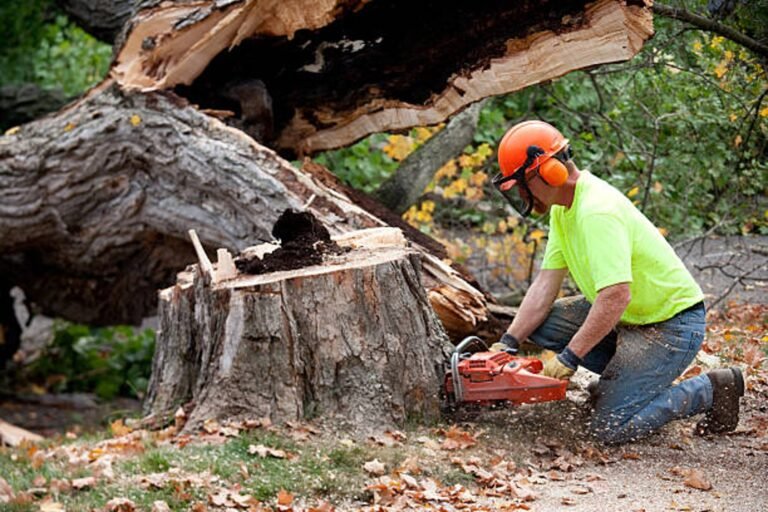
Our storm damage cleanup specialists serving El Monte safely remove storm-damaged trees while helping minimize additional property damage during the cleanup process.
Trees Near Power Lines Require Immediate Attention
One of the most dangerous situations after a storm involves trees contacting overhead utility lines.
Even if the power appears to be out, energized lines may still present life-threatening electrical hazards.
Never:
- Touch the tree.
- Touch fallen branches on utility wires.
- Attempt to cut branches near electrical equipment.
- Climb the tree.
Instead, contact your utility provider immediately and keep everyone away from the area until it has been declared safe.
Once the hazard has been addressed, our emergency tree service team serving El Monte homeowners can safely assess the remaining tree and recommend the most appropriate cleanup or removal plan.
Should You Remove a Storm-Damaged Tree Immediately?
One of the first questions homeowners ask after a storm is whether the damaged tree should be removed right away. While some situations require immediate action, others can often be addressed through pruning, structural support, or continued monitoring.
Every tree responds differently to storm damage. Factors such as the tree’s species, age, overall health, and the extent of the damage all influence the best course of action.
Rather than assuming removal is necessary, it’s important to have the tree evaluated by an experienced professional who can determine whether it can be safely preserved.
When Emergency Tree Removal May Be Necessary
Certain situations present an immediate safety risk and should be evaluated as quickly as possible.
Examples include:
- Trees leaning toward a home
- Split or cracked trunks
- Uprooted trees
- Trees resting on structures
- Trees blocking driveways or roads
- Large hanging limbs over occupied areas
- Trees touching power lines
These conditions can become increasingly dangerous if another storm or strong winds occur before repairs are made.
If your tree presents an immediate hazard, our 24-hour emergency tree service in El Monte, CA can safely assess the situation and recommend the most appropriate solution.
When Tree Pruning May Be Enough
Not every damaged tree needs to be removed.
Trees with only minor branch damage often recover well after proper pruning.
Professional pruning may help:
- Remove broken limbs
- Restore canopy balance
- Improve structural stability
- Reduce future hazards
- Encourage healthy new growth
If the trunk and root system remain healthy, pruning may allow the tree to continue thriving for many years.
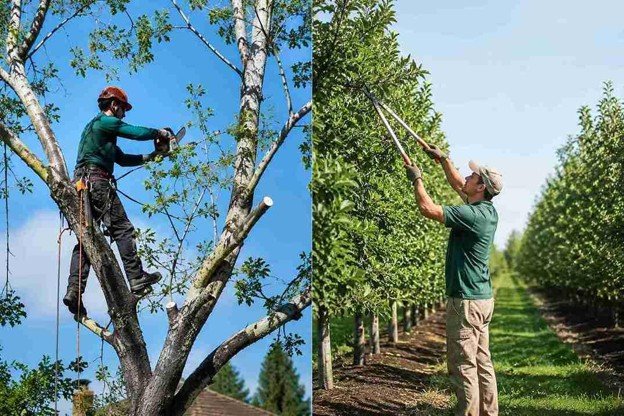
Our tree trimming and pruning specialists in El Monte can determine whether maintenance is a safe alternative to complete removal.
How Professionals Evaluate Storm-Damaged Trees
Professional inspections involve much more than simply looking for broken branches.
Tree care specialists evaluate the entire tree to determine whether hidden structural damage may create future safety concerns.
Every inspection considers the tree as a complete system, from its roots to the upper canopy.
Root System Inspection
Because roots anchor the entire tree, they are often inspected first.
Professionals look for:
- Soil lifting
- Exposed roots
- Root plate movement
- Saturated soil
- Root decay
- Changes in tree stability
Damage below ground may not become obvious until weeks after the storm has passed.
Trunk Evaluation
The trunk supports the tree’s overall structure.
During an inspection, professionals evaluate:
- Vertical cracks
- Cavities
- Splits
- Bark separation
- Decay
- Previous storm injuries
Even small cracks can indicate larger structural concerns that require additional evaluation.
Canopy Assessment
The upper canopy often reveals important clues about the tree’s condition.
Professionals inspect for:
- Broken limbs
- Hanging branches
- Deadwood
- Uneven canopy weight
- Torn branch attachments
- Future failure points
This information helps determine whether pruning, cabling, or removal may be appropriate.
Equipment Used During Emergency Tree Removal
Storm-damaged trees frequently require specialized equipment to safely remove unstable branches and heavy sections without causing additional damage.
The equipment used depends on the tree’s size, location, and surrounding obstacles.
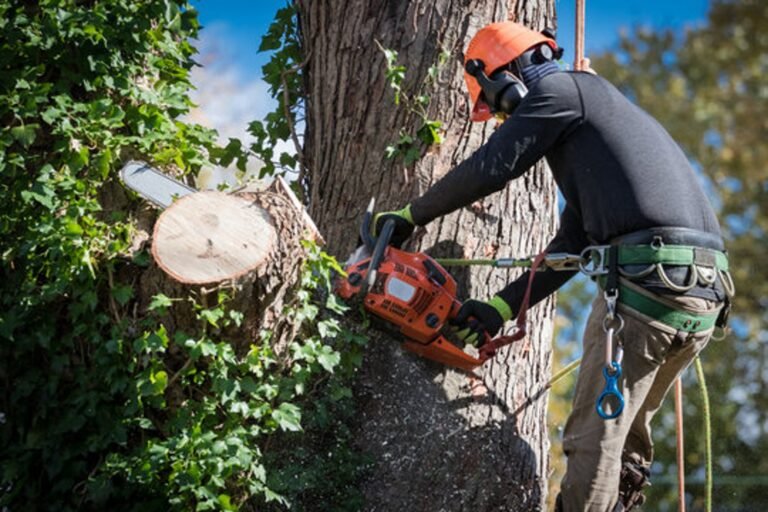
Professional crews may use:
- Chainsaws
- Climbing ropes
- Rigging systems
- Bucket trucks
- Cranes
- Wood chippers
- Mini skid steers
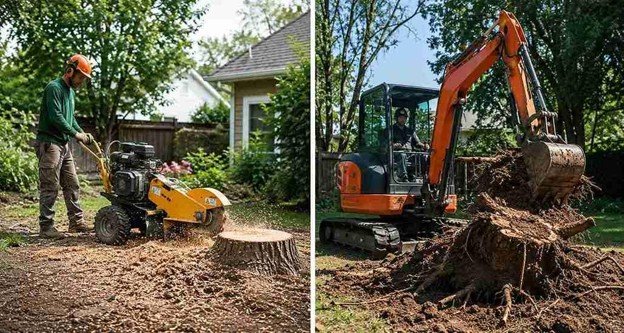
- Stump grinders
Using the proper equipment allows crews to carefully dismantle hazardous trees while protecting nearby homes, fences, vehicles, and landscaping.
When Crane Assistance May Be Needed
Large trees that have partially fallen or are leaning over structures sometimes require crane assistance.
A crane allows heavy sections of the tree to be lifted away in a controlled manner rather than allowing them to fall freely.
Crane-assisted removals are commonly used when:
- Trees are too unstable to climb.
- Large limbs extend over homes.
- Access is limited.
- The tree has extensive structural failure.
Although cranes are not required for every project, they can improve both safety and efficiency in complex removals.
If you’re interested in learning how equipment affects project pricing, our complete Tree Removal Cost Guide for El Monte homeowners explains the many factors that influence professional estimates.
Does Homeowners Insurance Cover Storm-Damaged Trees?
Many homeowners wonder whether their insurance policy will help cover storm-related tree damage.
Coverage varies depending on the individual insurance policy, the cause of the damage, and what was affected.
For example, policies may treat a tree that falls on a home differently than one that falls harmlessly in an open yard.
Because every policy is different, homeowners should review their coverage and contact their insurance provider for guidance before making assumptions about what may or may not be covered.
Why Documentation Is Important
After the area is safe, documentation can help support insurance discussions.
Helpful documentation may include:
- Photos of the damaged tree
- Images of affected structures
- Fallen branches
- Vehicle damage
- Fence damage
- Roof damage
- Cleanup estimates
Keeping organized records may make the claims process easier if your policy provides applicable coverage.
Preventing Future Storm Damage
While no tree can be made completely storm-proof, proactive maintenance often reduces the likelihood of severe damage during future weather events.
Healthy, well-maintained trees generally tolerate strong winds better than neglected trees with dead branches, structural defects, or excessive canopy weight.
Preventive care may include:
- Routine inspections
- Structural pruning
- Deadwood removal
- Canopy thinning where appropriate
- Monitoring tree health
- Soil improvement
- Deep root fertilization
Regular maintenance also allows developing problems to be identified before they become emergency situations.
Our complete tree care services in El Monte help homeowners protect their landscapes through year-round maintenance and professional inspections.
Can Regular Pruning Reduce Storm Damage?
In many cases, yes.
Proper pruning may help:
- Remove weak branches.
- Reduce excessive canopy weight.
- Improve wind movement through the tree.
- Eliminate deadwood.
- Reduce branch failure.
Rather than waiting until after the next storm, routine maintenance often provides the greatest long-term benefit for both tree health and property safety.
Choosing the Right Emergency Tree Service Company
Storm damage creates stressful situations, and many homeowners feel pressured to make quick decisions. While responding promptly is important, choosing a qualified tree service company can help ensure the work is completed safely and professionally.
An experienced emergency tree service should evaluate the entire tree, explain the recommended work, and use equipment appropriate for the property’s conditions. Professional crews also plan each removal carefully to minimize additional damage to homes, vehicles, fences, and surrounding landscaping.
If you need immediate assistance after severe weather, our 24-hour emergency tree service in El Monte, CA provides emergency response for hazardous trees, broken limbs, and storm-related cleanup.
Questions to Ask Before Hiring an Emergency Tree Service
Before authorizing any work, homeowners should consider asking:
- Is the tree safe to approach?
- Can the tree be saved with pruning?
- Will complete removal be necessary?
- What equipment will be used?
- Is debris removal included?
- Will the stump remain or be removed?
- How long will the cleanup take?
- Are there any additional safety concerns?
Taking a few moments to ask these questions can help you better understand the scope of work and make informed decisions during a stressful situation.
Common Mistakes Homeowners Make After a Storm
Storm damage often creates urgency, but rushing into cleanup without a plan can increase the risk of injury or additional property damage.
Some of the most common mistakes include:
- Walking beneath damaged trees before they have been inspected.
- Attempting to remove hanging branches using a ladder.
- Using a chainsaw without proper training or protective equipment.
- Touching branches that may be in contact with utility lines.
- Delaying professional inspections after significant storms.
- Assuming a standing tree is completely safe because it did not fall.
Taking a cautious approach helps protect both people and property while allowing professionals to evaluate hidden structural damage.
Avoid DIY Tree Removal After Storms
While clearing small branches from the yard may be appropriate, removing large storm-damaged trees is often far more complicated than it appears.
Storms place unusual stress on trunks, limbs, and root systems. Branches may remain under extreme tension, making them unpredictable when cut.
Professional crews use specialized climbing equipment, rigging systems, cranes, and controlled cutting techniques designed to safely remove damaged trees while minimizing risks to nearby structures.
If your tree has become unstable, our professional tree removal services in El Monte can safely evaluate and remove hazardous trees when necessary.
Storm Recovery Checklist for El Monte Homeowners
After severe weather, use this checklist before beginning cleanup:
✅ Stay away from damaged or leaning trees.
✅ Keep children, pets, and neighbors away from hazardous areas.
✅ Watch for hanging branches or split trunks.
✅ Never touch trees contacting power lines.
✅ Document visible damage with photographs if it is safe to do so.
✅ Contact your utility provider if electrical hazards exist.
✅ Schedule a professional tree inspection.
✅ Determine whether pruning or complete removal is appropriate.
✅ Remove hazardous debris only when it can be done safely.
Following these simple steps helps reduce unnecessary risks while allowing professionals to safely restore your property.
Final Thoughts
Storms can leave behind far more than fallen branches. Hidden structural damage, weakened root systems, and unstable limbs may continue to pose risks long after the weather has cleared.
While some trees recover with professional pruning and ongoing care, others require immediate attention to protect nearby homes, vehicles, and people. Understanding the warning signs and acting promptly can make a significant difference in both safety and long-term tree health.
Regular inspections, routine maintenance, and proactive pruning can also reduce the likelihood of severe storm damage in the future.
If your property has experienced storm damage, CanopyQuest Tree Care provides professional evaluations, emergency tree removal, storm damage cleanup, tree trimming, and ongoing tree care throughout El Monte and the surrounding communities.
You can also explore our El Monte Tree Service Resource Center for additional homeowner guides covering tree removal, pruning, storm preparedness, and year-round landscape maintenance.